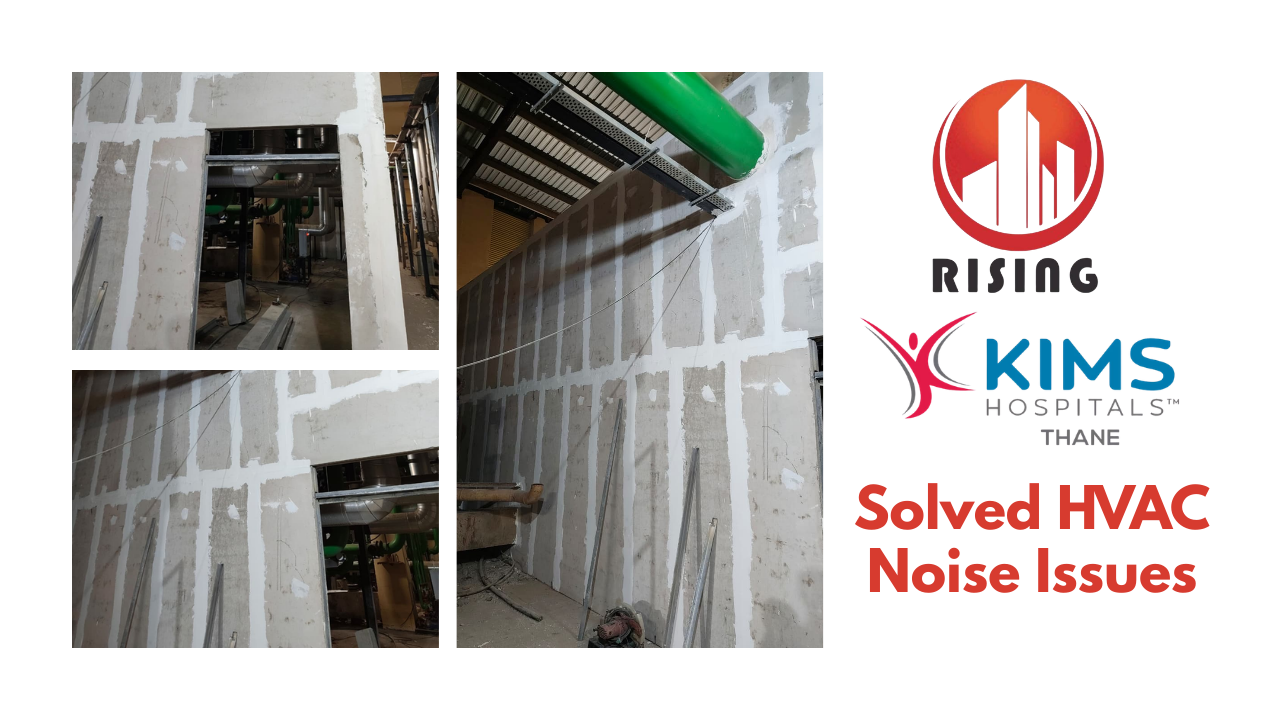
Understanding the Impact of HVAC Noise on Businesses
HVAC systems are critical for maintaining air quality, temperature control, and operational stability in commercial and healthcare facilities. However, when these systems generate excessive noise, they can create serious challenges for surrounding communities and organizations. This was the case at KIMS Hospital in Thane, where continuous HVAC operations caused significant noise disturbances, especially during nighttime hours.
For hospitals and other commercial establishments, unmanaged noise pollution can lead to complaints, strained community relations, and potential regulatory scrutiny. Beyond compliance, it directly impacts brand perception and operational credibility. Businesses that fail to address noise concerns risk long term reputational damage and operational disruptions.
The Challenge at KIMS Hospital, Thane
The HVAC equipment at KIMS Hospital was producing sound levels ranging between 78 and 80 dB prior to intervention. This level of noise is comparable to heavy traffic and can be highly disruptive when experienced consistently during the night.
Given the hospital’s location near residential areas, the noise generated by the continuously operating machines became a growing concern. The management required a solution that would not interfere with HVAC performance while significantly reducing sound emissions. The objective was clear: achieve measurable noise reduction without compromising system efficiency.
Strategic Acoustic Intervention with EPS Panels
To resolve the issue, a fully enclosed acoustic room was constructed around the HVAC equipment using 120 mm thick EPS panels. These panels are engineered to reduce sound levels by up to 45 dB, making them suitable for high performance industrial and commercial applications.
Expanded Polystyrene, commonly known as EPS, offers excellent sound absorption and insulation properties. When designed and installed correctly, EPS panel enclosures can significantly reduce airborne noise transmission while maintaining structural durability and thermal efficiency.
Why 120 mm EPS Panels Were Selected
- High Sound Reduction Capacity: Capable of reducing sound levels by up to 45 dB.
- Thermal Insulation: Supports HVAC efficiency by maintaining internal temperature stability.
- Lightweight Yet Durable: Ideal for constructing enclosures without overloading structural frameworks.
- Cost Effective Installation: Delivers measurable results without excessive capital expenditure.
- Low Maintenance Requirements: Ensures long term reliability and reduced lifecycle costs.
Measurable Results After Installation
Before installation, recorded sound levels ranged between 78 and 80 dB. After constructing the acoustic enclosure using EPS panels, the noise levels were reduced to approximately 42 to 45 dB.
This reduction represents a significant improvement in environmental comfort and compliance standards. A drop of over 30 dB reflects a transformative change in acoustic performance that directly benefits nearby residents and reinforces the hospital’s commitment to responsible operations.
Business Benefits of Effective HVAC Noise Control
Investing in professional noise control solutions offers measurable business advantages beyond community satisfaction. Organizations that proactively address industrial noise gain strategic benefits that impact both operations and brand positioning.
1. Regulatory Compliance and Risk Mitigation
Noise regulations in urban areas are becoming increasingly stringent. By reducing sound emissions to safer levels, businesses minimize the risk of penalties, legal disputes, and forced operational restrictions.
2. Strengthened Community Relations
Hospitals and commercial buildings operate within broader communities. When organizations actively reduce noise pollution, they demonstrate social responsibility and build trust with local residents.
3. Enhanced Brand Reputation
Noise management reflects operational discipline. Businesses that implement structured acoustic solutions are perceived as professional, compliant, and forward thinking.
4. Operational Continuity
Without proper sound control, complaints can escalate to regulatory interventions that disrupt operations. A well designed acoustic enclosure protects business continuity by preventing such disruptions.
5. Long Term Cost Efficiency
EPS panel enclosures provide durable performance with minimal maintenance. This reduces recurring costs and ensures predictable infrastructure performance over time.
Why EPS Panel Acoustic Rooms Are Ideal for Commercial and Healthcare Facilities
Acoustic rooms constructed with EPS panels are highly adaptable across industries. In healthcare environments, they help maintain a quiet atmosphere conducive to patient recovery. In commercial and industrial facilities, they reduce environmental impact and improve workplace comfort.
The modular nature of EPS panel systems allows for customization based on equipment size, sound intensity, and site constraints. This flexibility ensures that businesses receive targeted solutions rather than generic soundproofing measures.
Engineering Approach Matters
Effective noise reduction is not achieved by materials alone. Proper acoustic assessment, structural planning, and precision installation are critical to achieving measurable results.
The successful reduction of noise at KIMS Hospital demonstrates how a technically sound approach, combined with high performance EPS panels, can deliver tangible improvements. Constructing a fully enclosed acoustic room around the machines ensured that sound transmission was minimized without affecting HVAC performance.
Partnering with an Experienced Infrastructure Specialist
Businesses seeking reliable acoustic solutions must work with professionals who understand both material science and site specific challenges. RJM Infra has established expertise in delivering engineered EPS panel solutions for industrial, healthcare, and commercial infrastructure projects.
The KIMS Hospital project in Thane reflects the company’s capability to analyze complex noise issues and implement practical, high impact solutions. By focusing on measurable outcomes rather than temporary fixes, RJM Infra helps organizations protect operations, comply with regulations, and enhance stakeholder confidence.
Key Takeaways for Business Owners and Facility Managers
- Continuous HVAC noise can escalate into compliance and reputational risks.
- Sound levels above 75 dB in residential zones require immediate technical evaluation.
- 120 mm EPS panel enclosures can reduce noise levels by more than 30 dB when properly installed.
- Acoustic solutions protect both community relationships and operational stability.
- Professional assessment and precision installation are essential for long term success.
Conclusion
Uncontrolled HVAC noise is not merely an inconvenience. It is a strategic business challenge that demands proactive intervention. The transformation at KIMS Hospital in Thane illustrates how structured acoustic engineering using 120 mm EPS panels can reduce sound levels from 78 to 80 dB down to approximately 42 to 45 dB.
For businesses operating in urban or mixed use environments, investing in professional noise control is a forward looking decision that safeguards compliance, reputation, and operational continuity. To explore customized acoustic solutions for your facility, contact RJM Infra at sales@rjiminfra.com or call +919742942742.
Strategic infrastructure decisions today create sustainable operational advantages tomorrow.